Ford Tractor Serial Number Decoder: Unlocking Your Tractor's History
Ever wondered about the cryptic numbers stamped on your Ford tractor? They're more than just random digits; they're a historical record, revealing your tractor's age, origin, and even the manufacturing dates of individual parts. This guide will equip you with the knowledge to decipher this code, regardless of your tractor's age. While the process might seem daunting, we'll break it down step-by-step, ensuring a successful decoding experience. For similar decoding processes, check out this helpful resource on Massey Ferguson tractors: Massey Ferguson Serial Numbers.
Understanding Ford's Numbering Systems
Ford's serial number system wasn't static; it evolved over time. Pre-1950s tractors employed simpler systems, often resulting in less precise dating information and a greater reliance on context. Post-1950s tractors, however, utilized more comprehensive systems, incorporating plant codes and more detailed manufacturing information. These changes increase the complexity of decoding, but provide more information. This means your approach hinges on identifying the era of your tractor.
Pre-1950s Serial Numbers: A Simpler, Less Precise System
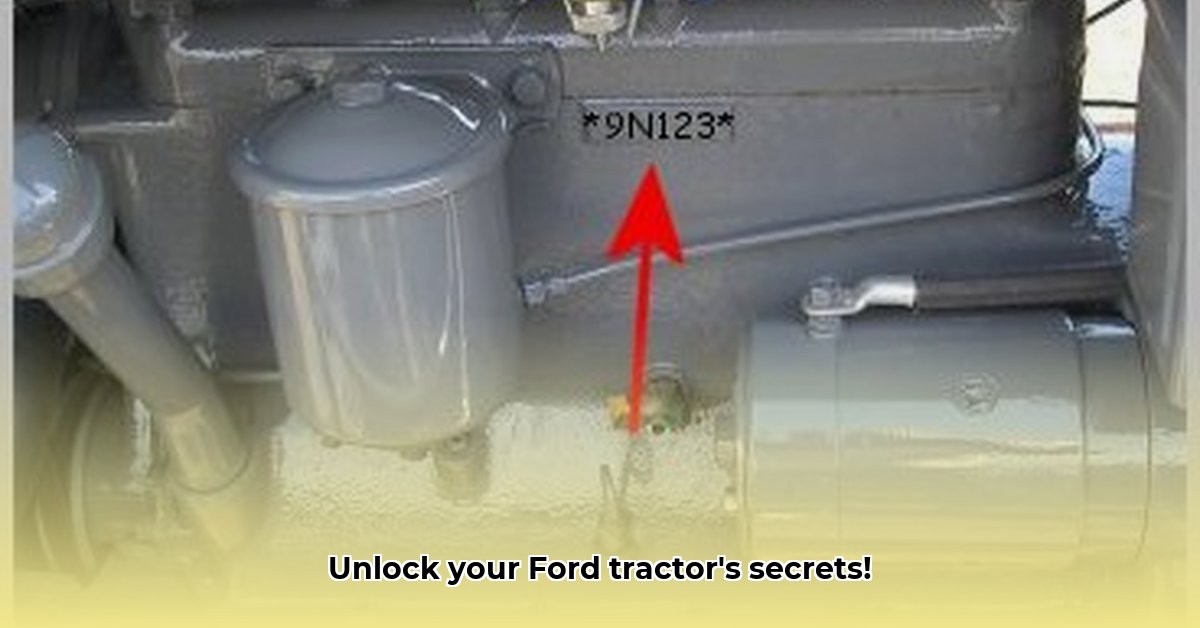
Early Ford tractors (think the legendary 9N, 2N, and 8N) typically had their serial numbers hand-stamped on the engine block. This often resulted in less precise dating. The numbers themselves often provided only a general indication of the manufacturing period. Precise details, such as the manufacturing month, were often absent. Furthermore, the numbers often lacked standardized formatting, making accurate interpretation challenging. This era’s less precise method emphasizes external resources for further clarity.
“Decoding pre-1950s serial numbers requires a significant amount of detective work,” says Dr. Amelia Hernandez, Agricultural Historian at the National Museum of Agricultural History. "You need to combine the serial number with other contextual clues, such as photographs and existing documentation, for a more accurate interpretation."
Post-1950s Serial Numbers: More Information, More Precision
Post-1950s Ford tractors offer a more structured approach to serial number decoding. Numbers are often found on the transmission housing and incorporate additional information such as plant codes. These codes often consist of letters and numbers, indicating the location where the tractor was assembled. Common plant codes, alongside their decoded information, provide highly contextual information for a more accurate understanding of your tractor's history. Additionally, this method often provides more accurate manufacturing dates. The shift to more consistent numbering provides a clear path towards a more accurate decoding.
Decoding the Casting Date Codes
Beyond the main serial number, individual tractor parts (engine block, transmission, etc.) often have casting date codes. These codes – usually a combination of numbers and letters – pinpoint the specific part’s manufacturing date. Understanding that these dates might precede the tractor's final assembly date is vital; parts are often manufactured in advance. Difficulties in interpreting these codes often arise due to variations in formatting across different parts and models.
Isn't it fascinating how much information these seemingly simple codes hold? Consider this: the casting dates can provide insight into the supply chain and manufacturing processes of the era. Moreover, it can help in identifying parts which might require replacement.
Troubleshooting and Common Issues
Decoding isn't always straightforward. Discrepancies between the main serial number and casting dates are common, often due to manufacturing complexities. Faded or damaged numbers present another challenge. To overcome these difficulties, the use of online forums and communities, specifically those dedicated to Ford tractors, is strongly recommended. A collaborative effort can usually unravel most discrepancies.
Advanced Techniques (Optional)
For advanced decoding, specializing in particular model variations is often necessary. This requires deeper research into historical production records and factory modifications. Utilizing online databases that are specifically dedicated to Ford tractors can be extremely helpful. This allows for access to historical records which might not be readily available otherwise.
Resources and Further Information
Several online resources exist to aid in your decoding quest. Online forums dedicated to Ford tractors are invaluable, offering a community of enthusiasts ready to assist. Collectible tractor clubs and local historical societies may possess additional resources and expertise. The online community can be highly impactful in identifying and solving issues that might not be obvious at first glance.
Conclusion
Decoding your Ford tractor's serial number is a journey of discovery, revealing valuable insights into its history. By mastering the techniques outlined in this guide and utilizing available resources, you can confidently unlock the secrets hidden within those seemingly random numbers. Remember, the accuracy of your decoding depends on careful observations, detailed examination and utilization of the resources provided above.